

The newest U.S. Bureau of Labor Statistics job data shows more job growth than expected in September. The economy added 119,000 new jobs during the month, but the unemployment rate still edged up to 4.4 percent.
What could these mixed numbers mean for mortgage rates going into 2026?
Let’s take a look.
What the latest jobs numbers mean for mortgage rates
The BLS released its September jobs report on Thursday, Nov. 20, more than six weeks later than usual because of the government shutdown. To be clear, the report is already outdated. It’s a snapshot of labor activity two months ago.
But the new numbers still have value, and they’re somewhat surprising. Analysts expected less job growth and a clear continuation of the labor cooldown signaled in the BLS data for July and August.
Instead, they got mixed signals. The economy created 119,000 new jobs, dwarfing the number of jobs created in July and August. Yet unemployment still increased to 4.4 percent, its highest level since 2021, during the pandemic.
Generally, a weaker jobs market means a cooling economy. And a cooler economy is usually a sign that mortgage rates could decline.
But which number will mortgage rates pay more attention to? The number of jobs created or the unemployment rate?
Mortgage rates have already decreased along with jobs data
The connection between a softer jobs market and lower mortgage rates has already been playing out this year. Mortgage rates have been on a gentle downward slope over the past year, posting the most consistent decreases beginning in May.
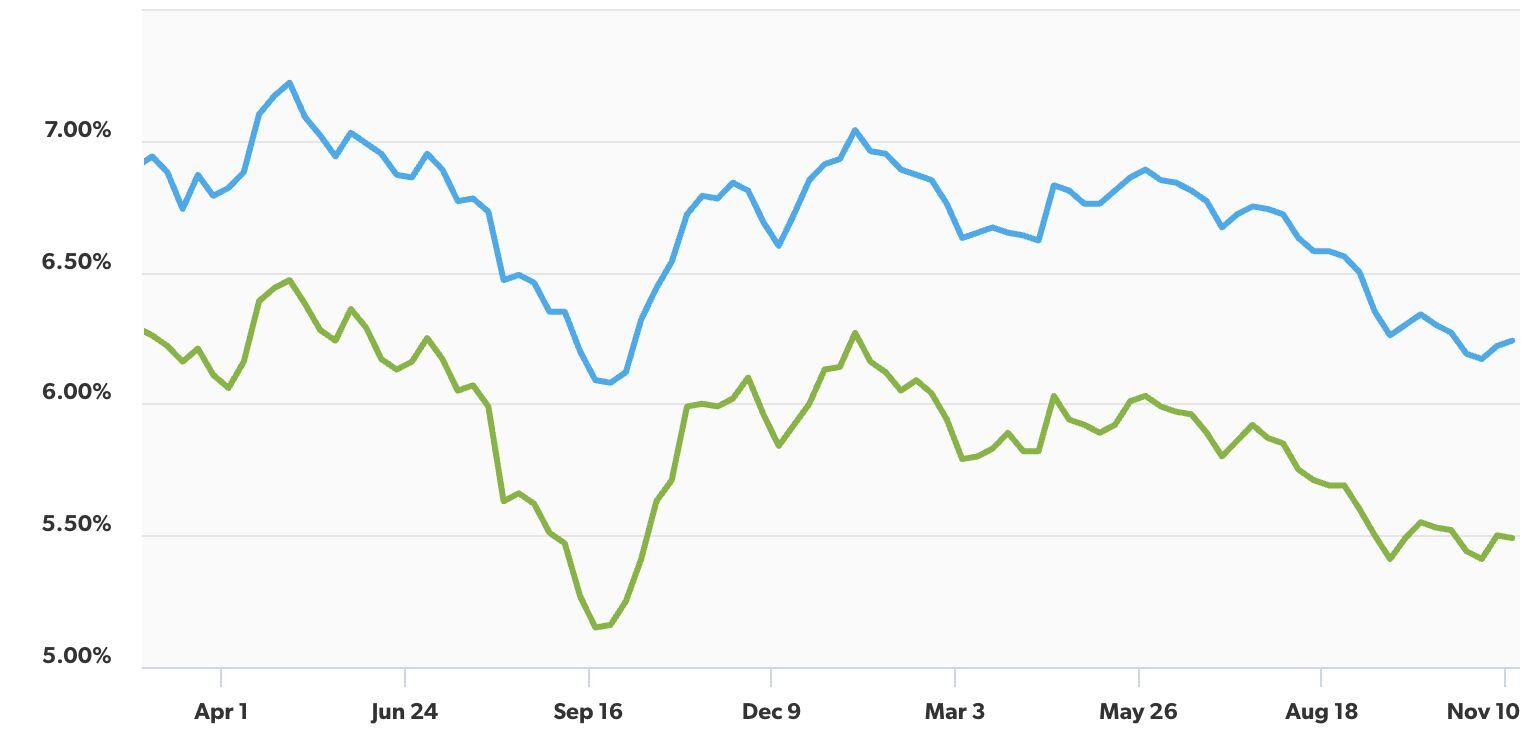
While there’s no direct connection between jobs data and mortgage rates, the correlation between the two is clear.
Slower job growth points to a softer economy, and softer economies tend to permit more affordable borrowing rates for home buyers and refinancers.
Why does the labor economy affect mortgage rates?
Lenders track changes in job markets because the bond market helps set mortgage rates.
Individual mortgage loans, when pooled together, become mortgage-backed securities (MBS) which investors buy and trade. Lower yields on MBSs, which tend to happen during slower economic periods, can mean lower mortgage rates for individual borrowers.
Mortgage backed securities also perform a lot like 10-year Treasury bonds, so bond prices and yields can also align with changes for individual borrowers.
Employment data also influences Fed decisions about rates
The Federal Reserve sets its benchmark borrowing rate based on the performance of the economy, and the number of jobs created is a key metric the Fed tracks.
The Fed lowered its benchmark rate by 0.25 percent in both September and October. While not tied directly to new mortgage rates, the Fed’s prime rate does connect directly to home equity lines of credit (HELOCs) which homeowners use to access their home’s value.
The Fed meets again during the second week of December, and the newly released September jobs data will be part of the equation when they decide whether to keep interest rates inching downward.
Why did unemployment go up even though the economy created jobs?
September’s jobs report seems like a contradiction at first glance. The economy added 119,000 jobs, yet the unemployment rate still increased to its highest level in four years? Why did that happen?
The unemployment rate shows the number of people who are looking for work without success.
Maybe they work in a field that is cutting jobs, making it hard to find employment. Or maybe they lost their job in June or July and still haven’t found a new job yet. Or maybe they recently graduated from college and started looking for a job.
For whatever reason, they didn’t get one of the 119,000 jobs created in September.
The next jobs report will be a little different, too
Federal workers who normally run the Bureau of Labor Statistics (BLS) were on leave during the 43-day government shutdown that spanned October and almost half of November. That’s why September’s jobs report has been delayed.
During the shutdown, BLS analysts weren’t at work so they couldn’t collect real-time data about jobs growth in October. So the BLS will issue a combined October / November report in early December, leading up to the next Federal Reserve Open Market Committee meeting Dec. 9-10.
There are already signs that the next jobs numbers will be lower. For example, many major retailers are not hiring as many seasonal workers this holiday season. Plus, construction jobs tend to decline during colder months.
Should the jobs report affect home buying or refinance decisions?
The economy, including the market for mortgage rates, is always changing. Refinancing homeowners can track mortgage rates as they decide when to refinance. Waiting might lead to savings.
For example, someone who bought in late 2023, when average rates were pushing 8 percent, can likely qualify for a lower rate now.
Homeowners in this position may be tempted to wait another month to see where rates go, though this can also backfire if rates inch up.
Home buyers, on the other hand, have less control over when they lock in their rate. Buyers whose leases are expiring or who are selling the home they live in need to buy now, regardless of what might happen to rates over the next couple months.
Fortunately for these buyers, rates have been on a downward slope over the past few months.
A mortgage preapproval can show what these numbers mean for your budget.
...in as little as 3 minutes – no credit impact